Skip to content
Resources › Clinical Evidence › Part 4 · Models of care › This paper
Pilot study · IJGO · 2025

Every other week from home: Sheba’s hybrid care for gestational diabetes

Hybrid remote and in-clinic maternal-fetal surveillance for women with gestational diabetes: a prospective pilot study

In short

Women with gestational diabetes are seen often in the last weeks of pregnancy. Sheba Medical Center tested a hybrid month: two visits at the clinic and two full visits from home, where each woman ran every test herself with remote guidance, including the fetal nonstress test with INVU.

Why it was studied

Gestational diabetes calls for close glucose control and, from 32 weeks, regular checks of mother and baby, up to twice a week. Remote care had so far replaced single pieces of a visit, such as blood pressure or the fetal monitor. This study tested whether a whole visit, maternal and fetal, could be done from home.

How it was done

A prospective pilot at Sheba Medical Center’s maternity centre, January to July 2022. 20 women with gestational diabetes, carrying one baby, from 32 weeks (median 33), living within a 30-minute drive, with a BMI under 40. Over four weeks they alternated home and clinic visits, starting at home.

Each woman received a phone with a data plan, an INVU belt, a home ultrasound probe (PulseNmore), a blood-pressure cuff and urine test kits (Healthy.io), and was trained by a midwife. At a home visit she logged vital signs and glucose in an app and did a urine test with the phone; a midwife connected her to the nonstress test with INVU; a physician checked the amniotic fluid by remote ultrasound and finished with a video consultation.

What they found

  • Complete visits: 38 of 39 home visits (97.4%) gave a full assessment of mother and baby. In the one that did not, the nonstress test could not be completed, possibly because of a faulty belt buckle; that woman, at the study’s upper BMI limit and at 32 weeks, had a readable test two weeks later.
  • Time: a median of 59 minutes for a home visit against 159 minutes door to door for a clinic visit. The second home visit was quicker than the first.
  • Glucose logging: fasting values were recorded 92.2% of the time during hybrid care and 61.8% afterwards, until birth.
  • Satisfaction: 6.6 of 7 on a telehealth usability questionnaire. Women rated INVU 9.4 of 10 as something they would recommend; all would choose the same care in a future pregnancy.
  • Safety and outcomes: no adverse events with the equipment; no baby over 4 kg, no shoulder dystocia, no newborn low blood sugar.

Why it matters

A major hospital built a complete remote visit around a set of home devices and chose INVU for the fetal heart. The same team went on to hospitalise high-risk patients at home with INVU; Penn Medicine used it for home nonstress tests.

What it does not show

20 women at one hospital, with no comparison group and strict entry rules (BMI under 40, close to the hospital). The results belong to the whole programme of three technologies and a care team, not to INVU alone. The authors call for larger studies with a control group.

Who ran it

Run by Sheba Medical Center researchers (first author Michal Axelrod; senior author Abraham Tsur) and approved by Sheba’s review board. Nuvo supplied the INVU belts, blood-pressure cuffs, phones and technical support free of charge; PulseNmore and Healthy.io supplied theirs; Sheba covered other costs. The authors made all decisions on design, interpretation and writing. First presented at the Society for Maternal-Fetal Medicine in 2023.

Cover photo: Israel Preker, PikiWiki – Israel free image collection project, via Wikimedia Commons (CC BY 2.5), cropped.

97.4%of home visits complete (38 of 39)
59 vs 159 minmedian home visit vs clinic visit, door to door
92% vs 62%fasting glucose values logged during hybrid care vs after it
The paper
Hybrid remote and in-clinic maternal-fetal surveillance for women with gestational diabetes: a prospective pilot study

Axelrod M, Lahav Ezra H, Galler E, Nir O, Ofir K, Barkai G, Sivan E, Mazaki-Tovi S, Tsur A. Int J Gynecol Obstet 2025;170(1):430–438.

doi.org/10.1002/ijgo.16148
Read in the journal → Copied
Summary by Nuvo. The full text is published by International Journal of Gynecology & Obstetrics.

Highlighted research

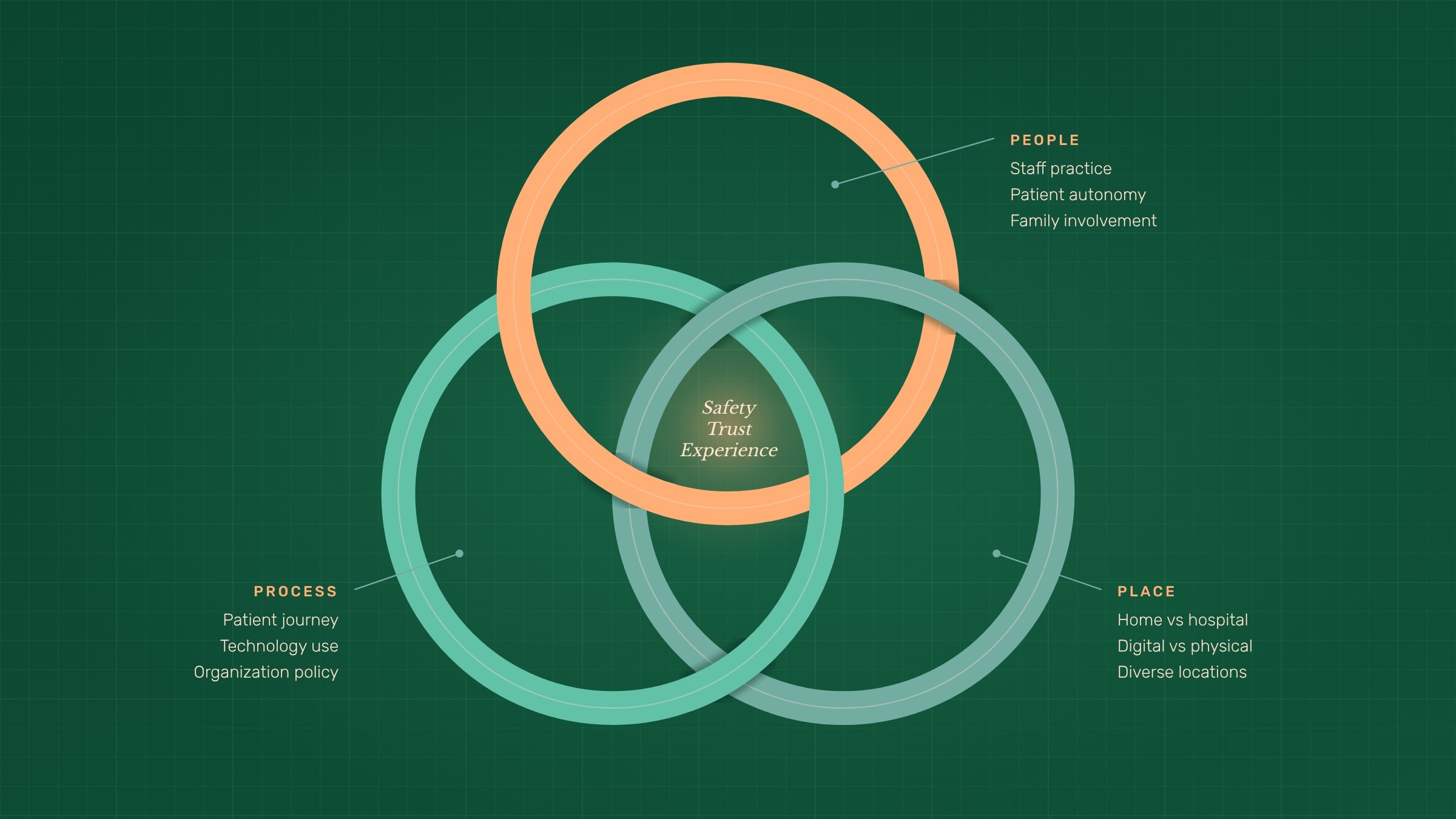
Three interwoven rings: People, Process and Place, with safety, trust and experience at the centre Programme studyFront Digit Health · 2026

Hospitalised at home: how Sheba redesigned care for high-risk pregnancy

Sheba’s hybrid unit lets women with high-risk pregnancies be hospitalised at home and visit twice a week. A 2026 study of 40 interviews looks at what changed; INVU provides the fetal heart tracing.

Read the highlight →
Speech bubbles of different sizes, colours and shapes, each with a different kind of voice, on Nuvo dark green Research letterAJOG MFM · 2024

In their own words: what Penn patients said about nonstress tests at home

Penn asked high-risk patients who did their nonstress tests at home with INVU how it went. They rated it acceptable, valued skipping clinic trips, and their comments on belt fit changed the device.

Read the highlight →
A desert highway at dusk Letter to the editorsAJOG · 2024

A year of remote NSTs in rural care: Banner Health’s view

After a year of INVU in its rural telemedicine programme, a Banner Health obstetrician wrote to AJOG: most remote NSTs were readable, and patients stopped missing visits.

Read the highlight →
Silhouette of a pregnant woman standing at a bright window at home Research letterAJOG · 2023

Penn Medicine moved high-risk nonstress tests into patients’ homes

At Penn Medicine, 29 women with high-risk pregnancies did their nonstress tests at home with INVU. 93.9% of tests could be read, and 88.5% of appointments needed no clinic visit.

Read the highlight →
Twelve monitor screens, six lit with different real INVU signals ReviewBMC Pregnancy Childbirth · 2023

Fetal monitoring 4.0: an independent review picks out INVU as the device built for home

Researchers in Czechia reviewed fetal monitoring for the post-COVID era. Of six certified monitors they compared, they describe INVU as the only one built for home monitoring rather than labour.

Read the highlight →
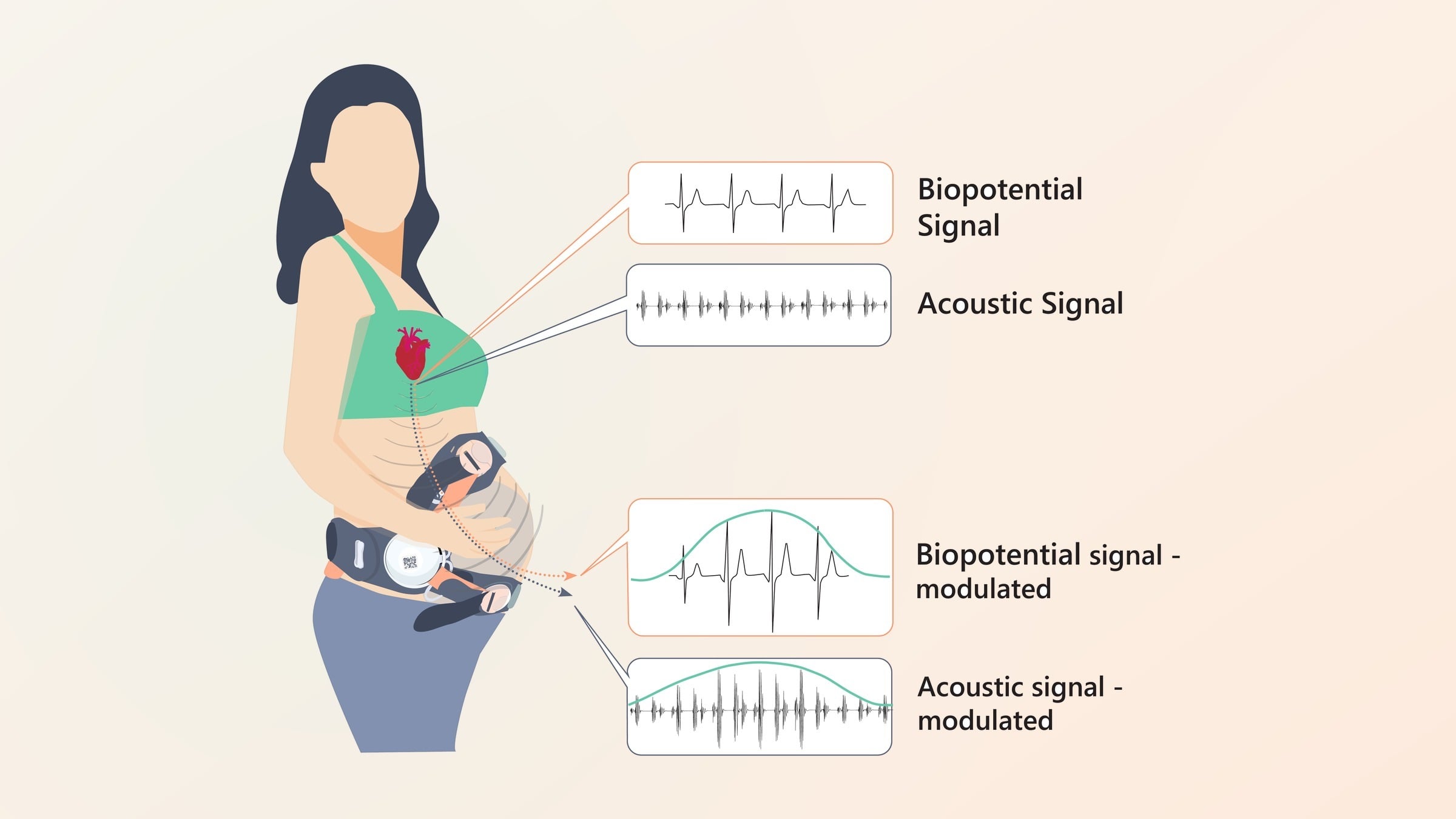
How INVU reads contractions: the mother’s heart signal, picked up as biopotential and acoustic signals, swells with each contraction Validation studyAJOG · 2022

Improved uterine contraction detection compared with conventional TOCO

In 118 women in labour, INVU detected 84.8% of the contractions confirmed by the intrauterine catheter, beat the external TOCO belt (82% vs 38%) and kept working in women with obesity.

Read the highlight →
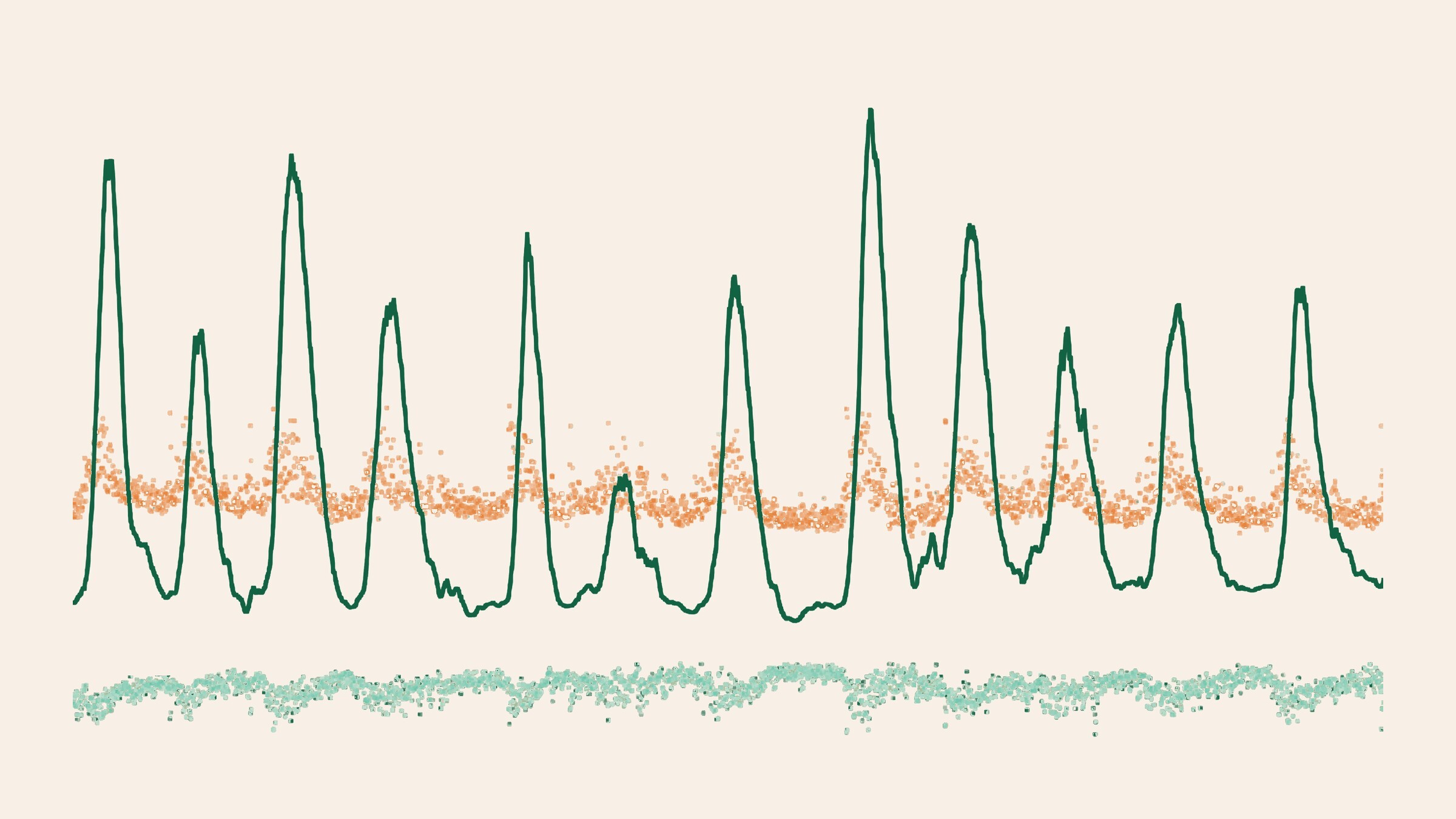
The contraction trace rises and falls, and the height of each of the mother’s heartbeats swells with every contraction Validation studyFront Bioeng Biotechnol · 2022

Reading contractions in the mother’s own heartbeat

The engineering paper behind INVU’s contraction reading: as the uterus tightens, the mother’s heartbeat signals change shape. In 41 women in labour, the method found 89.8% of catheter-confirmed contractions.

Read the highlight →
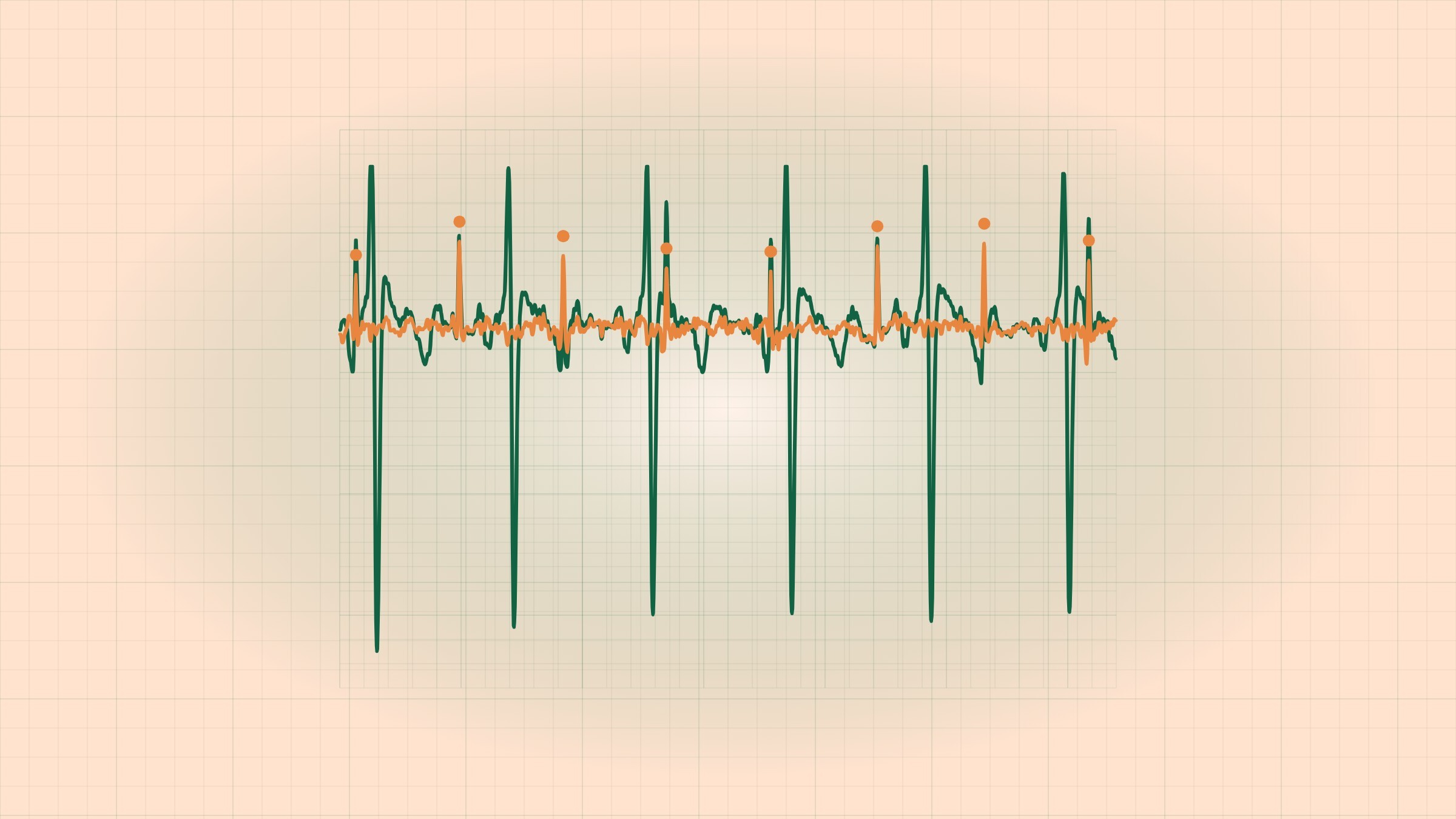
The mother's heartbeat and the baby's in one INVU recording: tall slow beats and small fast beats Validation studyAJOG MFM · 2020

INVU heart-rate readings agreed closely with hospital CTG

147 women at four centres wore INVU and the hospital monitor at the same time. Fetal heart rate agreed to within about 8 to 9 beats per minute, with no ultrasound and no repositioning.

Read the highlight →
Get in touch

Interested in learning more?

Whether you would like to know more about INVU™, explore a research collaboration, or partner with us, we would love to hear from you.

Email info@nuvocares.com ↗