Some high-risk pregnancies mean weeks or months in a hospital bed. Since October 2023 Sheba has offered an alternative: hospital-level care at home, with checks three times a day by video and home devices, and two visits a week to a small hybrid unit. This study asks what it takes to build that, from the people, processes and places involved.
The same doctors and midwives at home and in hospital; women stayed with their children and partners could keep working.
Women run their own monitoring and scans at set times. One called it “a schedule like a soldier on duty.”
Care moved between home, work and a five-place hybrid unit, so the hospital bed is no longer the centre.
What it is
A qualitative study by researchers at Sheba Medical Center and Tel Aviv University, published open access in Frontiers in Digital Health in September 2026. From October 2024 the lead researcher observed remote sessions and hospital visits and held 40 interviews: 14 patients, 2 partners, 13 doctors, nurses and midwives, 6 managers and 5 people from the remote-care companies. The findings are organised by People, Process and Place.
How the programme works
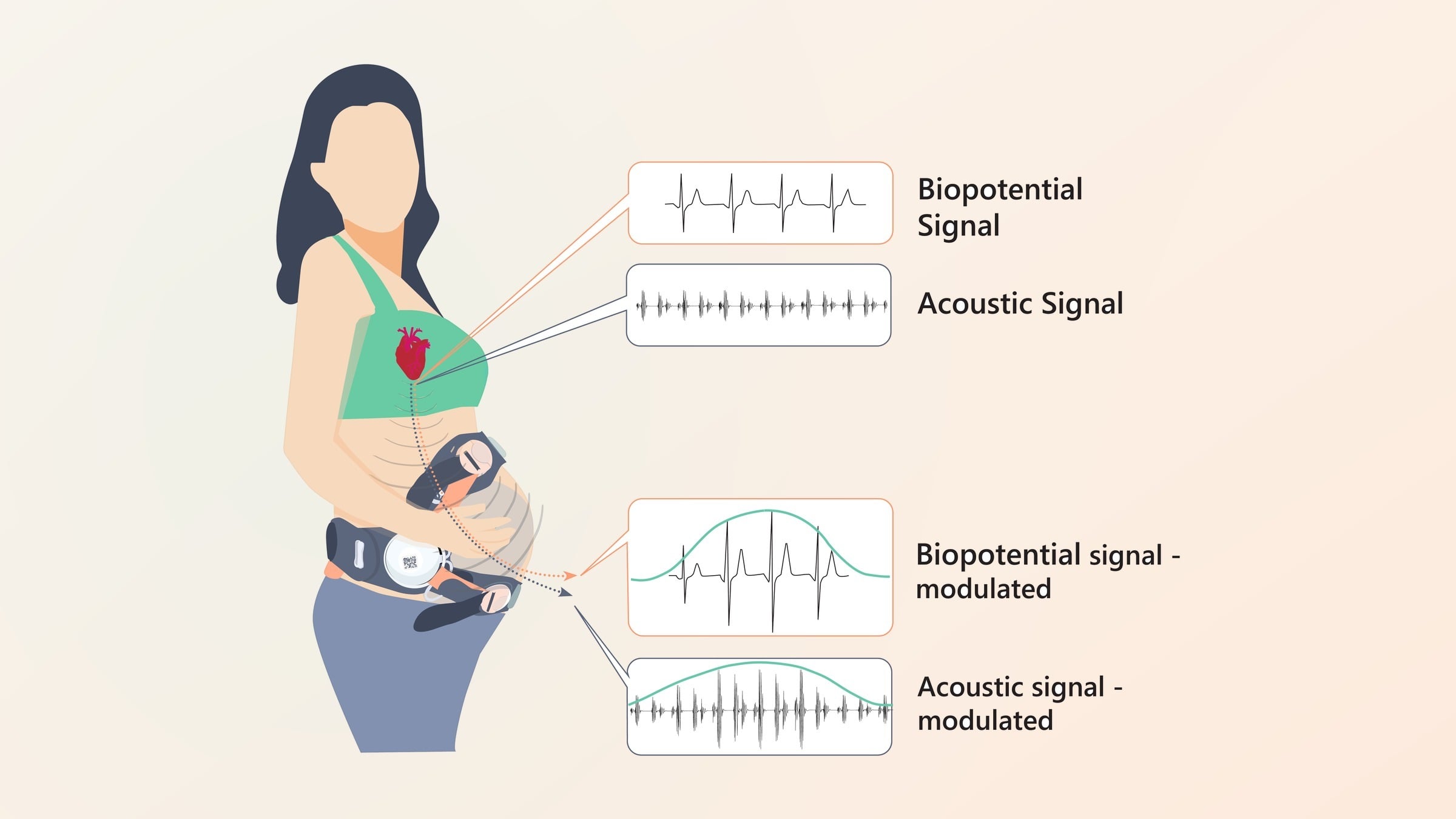
Women from 23 weeks with severe complications who live within 35 km can be hospitalised at home. Three times a day they are assessed remotely; they record vital signs and glucose (Datos), the fetal heart tracing (INVU by Nuvo) and fetal ultrasound (PulseNmore) themselves, guided online by the team. Twice a week they come to a hybrid unit with five places, staffed by the same team. They go home only once they can manage the devices.
What they found
- People: continuity with one team, more explanation and partnership, more autonomy for women and room for family life. Some staff found remote care hard without physical contact.
- Process: new training, routines and protocols; beds are not held for hybrid patients, so a return can mean waiting in the emergency room; payment models are not yet settled and programmes stay pilots until insurers are convinced.
- Place: care at home, at work and in the hospital unit, in person and on screen.
- The programme’s numbers (October 2023 to December 2025): 206 admissions, 2,998 days of remote care, 14.6 days per patient on average; one patient did not return urgently when asked (for a nonstress test), and no adverse events at home.
Why it matters
A peer-reviewed paper from Sheba names INVU by Nuvo as the fetal heart tracing used in a hospital-at-home unit for high-risk pregnancy. It builds on the same team’s gestational diabetes pilot.
What it does not show
It did not evaluate clinical effectiveness or birth outcomes, and the numbers are the programme’s, not INVU’s. Findings were checked with clinical and management leaders but not with patients, and the share of invited people who took part is not known. It describes long admissions and may not apply to short ones.
Who ran it
Researchers from Sheba Medical Center (ARC Innovation, Obstetrics and Gynecology, Sheba Beyond) and Tel Aviv University, with Abraham Tsur as senior author. The authors report no funding for the work, and their declared interests do not include Nuvo. Published under a CC BY licence.
Cover: adapted from Figure 1 of Pilosof et al., Front Digit Health 2026 (CC BY), redrawn as interwoven rings in Nuvo colours.
Pilosof NP, Yoeli-Ullman R, Toussia-Cohen S, Galler E, Barkai G, Zimlichman E, Tsur A. Front Digit Health 2026;8:1797655.
doi.org/10.3389/fdgth.2026.1797655