When war breaks out, the first instinct is survival. Hospitals fill up, resources tighten, and for expectant mothers, fear takes on a whole new meaning. Yet even in those moments, life insists on continuing — and so does care.
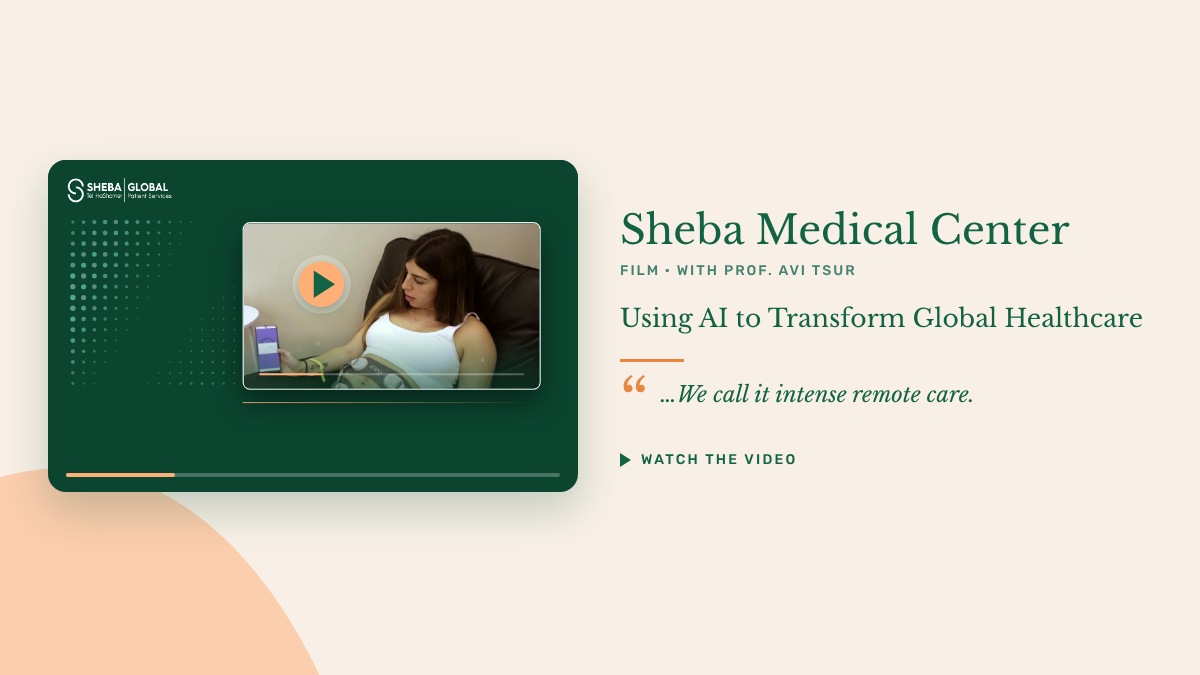
That reality became painfully clear in Israel after October 7, 2023, when hospitals like Sheba Medical Center had to clear wards for the expected casualties while still ensuring critical medical oversight. Among those sent home were women with high-risk pregnancies — patients who, under normal circumstances, would stay in hospital to be monitored. How it happened is told in From war zone to living rooms.
With INVU™ by Nuvo, their monitoring went home with them.
If safe, reliable monitoring can happen in a conflict zone, it can — and should — happen anywhere.
From emergency response to everyday transformation
When Sheba’s medical teams decided to send high-risk expectant mothers home, they were stepping into uncharted territory — trusting technology to bridge the gap between hospital and home.
With INVU™, these women continued to have clinician-reviewed monitoring of fetal and maternal heart rate and uterine activity, all from their own living rooms. Clinicians reviewed the readings remotely and could call a woman back to hospital if anything seemed off.
This wasn’t just telehealth — it was connected care in its truest form. Families stayed together.
Over two years, Sheba’s hybrid unit for high-risk pregnancy recorded 206 admissions and 2,998 days of hospital-level care at home (Sheba’s own paper, 2026).
What began as a crisis response became a case study in the future of maternal health: resilient, data-driven, and centered around the woman — not the hospital.
The power of “care everywhere”
The experience in Israel revealed something that goes far beyond wartime medicine: if safe, reliable monitoring can happen in a conflict zone, it can — and should — happen anywhere.
Across the world, millions of women struggle with limited access to prenatal care. Geography, mobility, or cost barriers prevent them from attending frequent clinic visits. In some regions, there aren’t enough OB/GYNs to go around.
INVU™ offers a bridge. Combining biopotential and acoustic sensors with Nuvo’s algorithms, it enables non-invasive monitoring sessions prescribed by clinicians and completed at home. It’s a system designed for the moments when hospital walls can’t — or shouldn’t — define where care happens.
Rewriting the narrative of maternal health
The gaps are real. In the U.S. alone, about 2.2 million women of childbearing age live in maternity care deserts, counties with no hospital offering obstetric care and no obstetric providers (March of Dimes, 2022). At the same time, wearable technology and digital health tools are advancing faster than ever before.
Nuvo sits at the intersection of those two truths. Its mission isn’t just to innovate for convenience — it’s to make equitable, continuous, and compassionate care accessible to every mother, everywhere.
What happened in Israel shows more than that remote monitoring can work in war. It shows how it could redefine the standard of care in peace.
The human story behind the technology
At the heart of Nuvo’s work isn’t just circuitry or software — it’s empathy. INVU™ was born from one father’s desire to keep his wife and unborn child safe, and it continues to serve that same purpose for mothers today.
Whether in the calm of everyday life or in the chaos of conflict, the goal remains the same: to let women feel seen, supported, and safe — without compromise.
In times of peace, Nuvo empowers connection. In times of crisis, it protects it. That’s the future of maternal care — everywhere.
— Sandy Hammer
Read more
- From war zone to living rooms: what happened at Sheba, October 2023 to June 2025.
- Hospitalised at home: Sheba’s 2026 paper on its hybrid unit for high-risk pregnancy.
- Sheba at the World Hospital at Home Congress 2025: Sheba’s poster in Vienna.