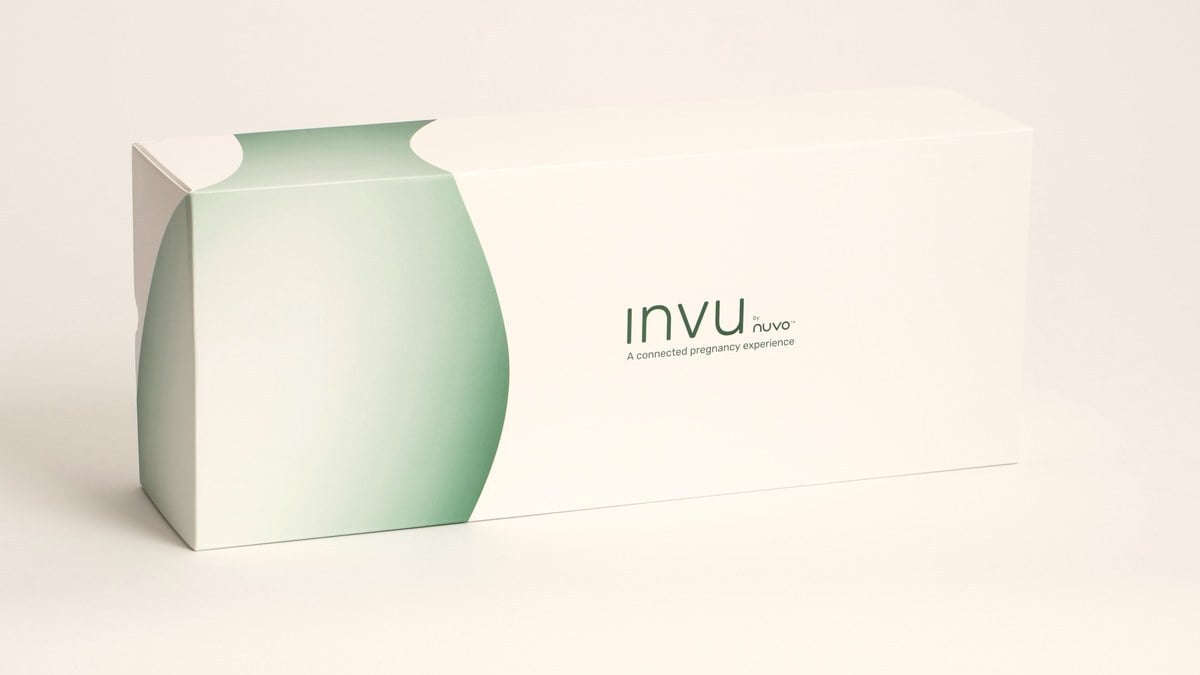
A non-stress test (NST) is a simple, painless check of how your baby is doing. It records your baby's heartbeat, and how it speeds up when your baby moves, for about 20 to 40 minutes.
What it checks
Your baby's heart rate, and how it rises when your baby moves.
How it feels
Two soft sensors rest on your belly while you sit back. No needles and no pain.
Why "non-stress"
Nothing is done to your baby. The test only listens and records.
Why your doctor may order one
NSTs are usually done in the last three months of pregnancy, most often after 28 weeks, when:
- your baby seems to move less than usual
- you have high blood pressure, diabetes or another condition
- your baby is smaller than expected, or an earlier pregnancy had problems
- you are expecting twins or more, or you are past your due date
It does not mean something is wrong. Often it is a routine check, once or twice a week, as your doctor decides.

What happens during the test
Get comfortable
Sit back in a reclining chair or rest on a bed. Use the bathroom first.
Two sensors
One picks up your baby's heartbeat, the other your tightenings (contractions).
Mark the moves
Press a button when you feel your baby move. A sleepy baby may need a snack or a gentle sound.
About 20–40 minutes
Your care team looks at the recording and tells you what it shows.

What the recording looks like: your baby's heart rate goes up when your baby moves. Illustration, not a real tracing.
What the results mean
Reassuring
Your baby's heart rate went up at least twice during the test, as expected when a baby moves.
More time is needed
The heart rate did not go up enough. Often the baby was simply asleep. Your doctor may continue the test, or do another one, such as a biophysical profile (an NST with an ultrasound).
If your baby moves less than usual, call your doctor right away.
Don't wait for your next test. Only your doctor or care team can read your recording and explain it.
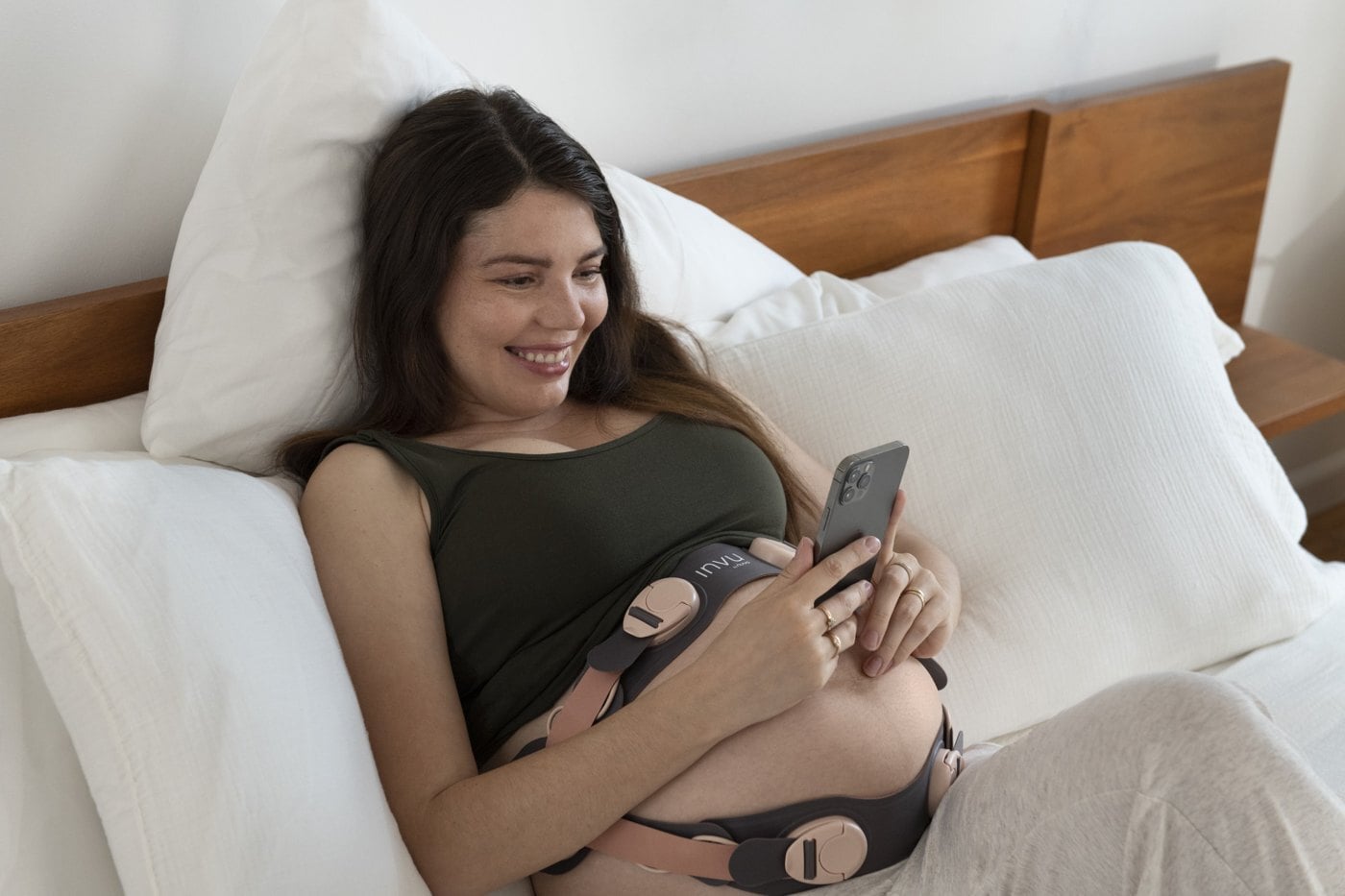
Can an NST be done at home?
For some pregnancies, yes
INVU™ by Nuvo is the first FDA-cleared non-stress test a mother takes at home. A soft sensor band rests on your belly, and the INVU™ App on your phone guides each session. Your care team reviews every session in INVU™ Pro.
Prescribed by your OB, for a pregnancy with one baby, from 32 weeks.
INVU™ for mothers → How INVU™ works
INVU by Nuvo® does not replace your prenatal visits or emergency care.
Questions to ask your doctor
- Why do I need NSTs, and how often?
- Where: in the clinic, or at home?
- Who tells me the results, and when?
- What do I do if my baby moves less?
Before your test
- No special preparation is needed
- Use the bathroom just before
- Wear comfortable, two-piece clothing
- Bring something to read or listen to
Words you may hear
Baseline
Your baby's usual heart rate at rest.
Acceleration
A short rise in heart rate, often when the baby moves.
Contraction
A tightening of the womb; many are mild.
Biophysical profile
An NST plus an ultrasound check of your baby.
Contraction stress test
A different test: how the heart rate responds to contractions.
Stories from mothers
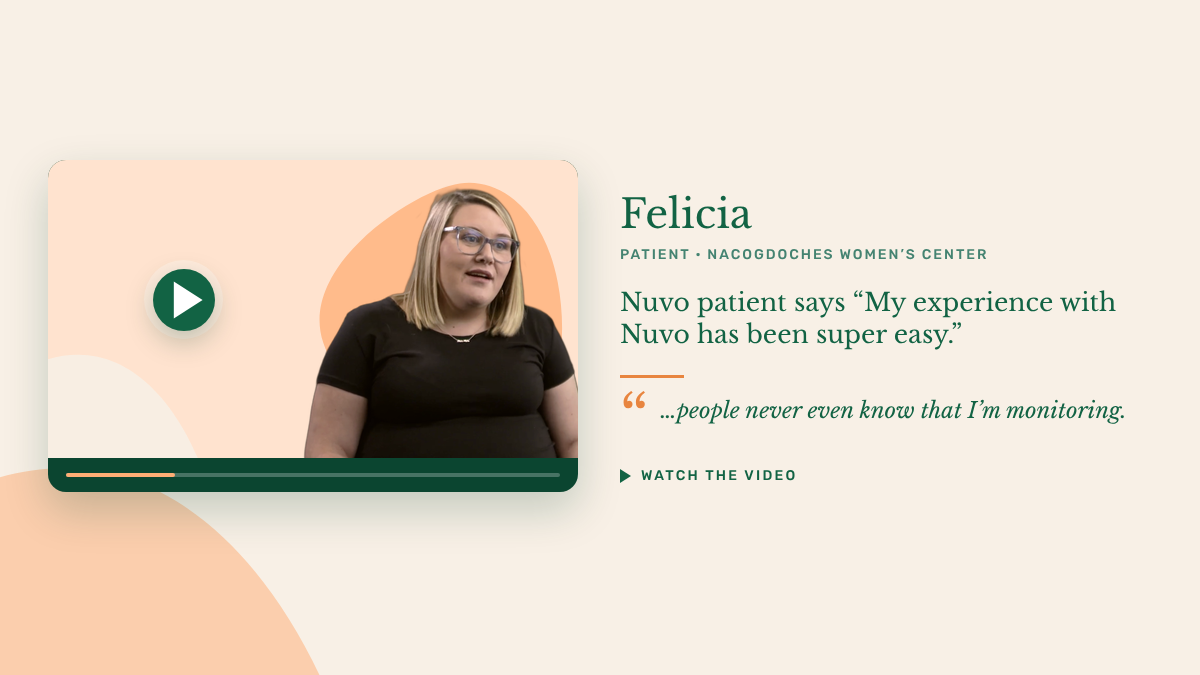 Voices · Video“My experience with Nuvo has been super easy.”Felicia, a patient in rural East Texas, and her doctor on what remote NSTs looked like for her.Watch →
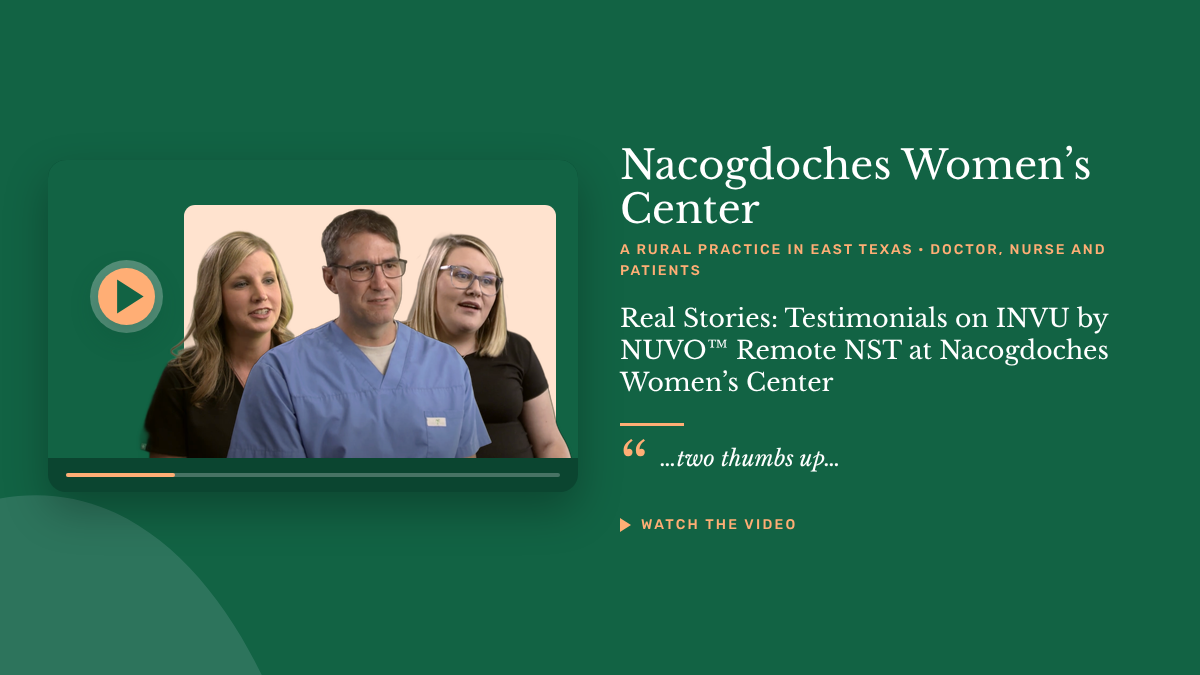 Voices · FilmReal stories from Nacogdoches Women’s CenterTwo mothers, Chelsea and Felicia, with their doctor and nurse, on NSTs from home.Watch →
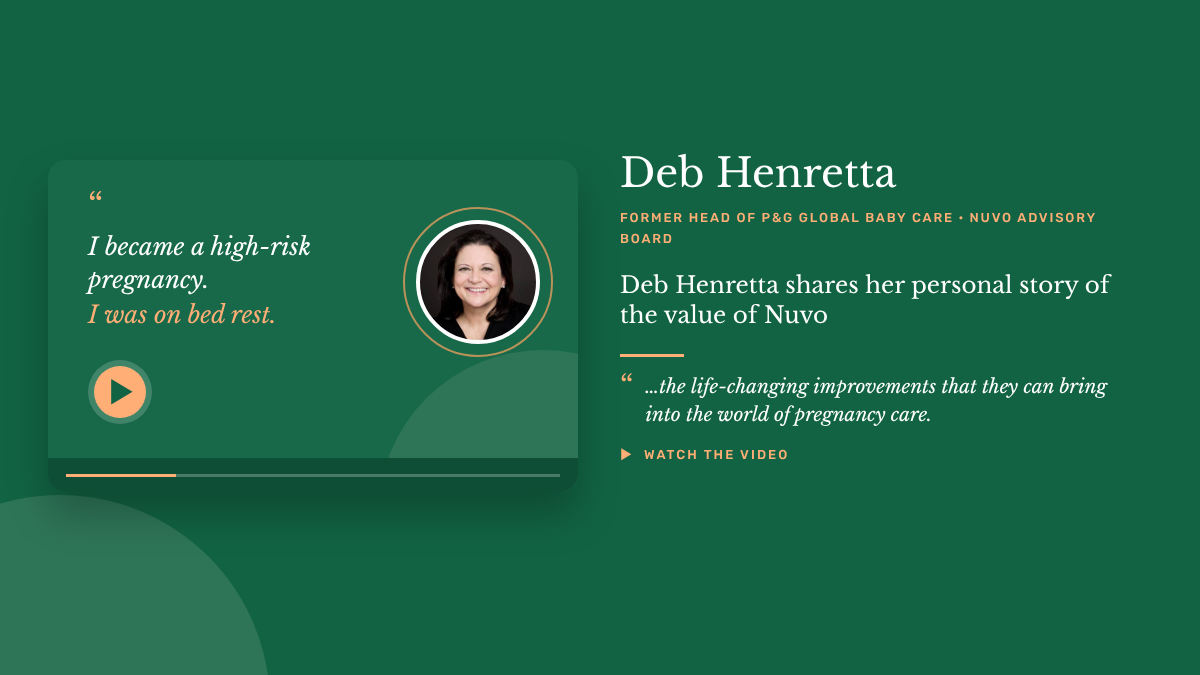 Voices · Video“I became a high-risk pregnancy. I was on bed rest.”Deb Henretta tells the story of her own high-risk pregnancy.Watch →
Sources: MedlinePlus (U.S. National Library of Medicine), "Nonstress Test"; StatPearls, "Nonstress Test"; American College of Obstetricians and Gynecologists, patient information on fetal testing. Photos: Yan Krukau and MART PRODUCTION on Pexels; INVU™ photo: Nuvo. This page is general information and does not replace advice from your doctor.