
For Clinicians
There’s a better way to do NSTs
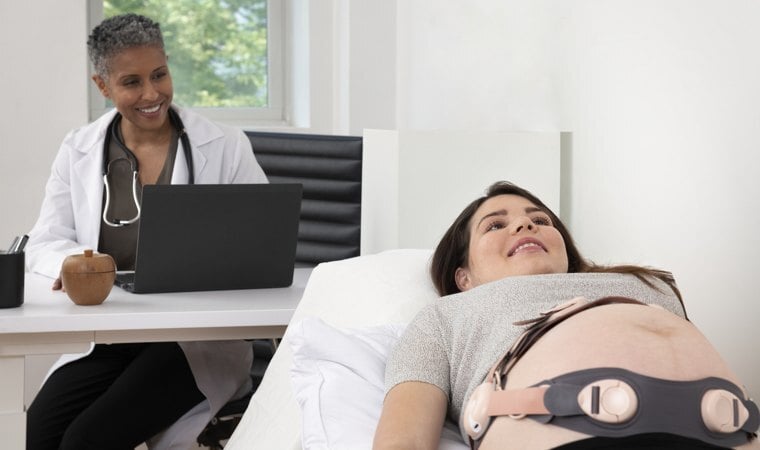
Nuvo’s platform enables you to conduct NSTs with patients wherever they are.
“Nuvo has been amazing! It’s had a huge impact on opening appointment times for other patients and allows patients more freedom and the opportunity to save PTO.”Alisa King, OB Nurse Manager
McMorries OBGYN & Infertility
Traditional care and next-gen care, side by side
The same prescribed test, with the clinic’s time spent on reading tracings instead of running rooms.
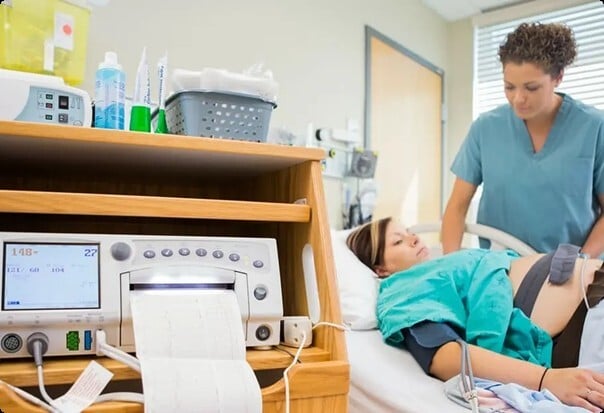
The in-clinic NST
Clinic-dependent. Episodic.
- The expectant mother travels to the clinic for every test, often once or twice a week.
- One patient, one monitor and one room for each session.
- Staff place and readjust the Doppler and pressure (TOCO) transducers.
- The TOCO belt picks up fewer contractions as BMI rises.1
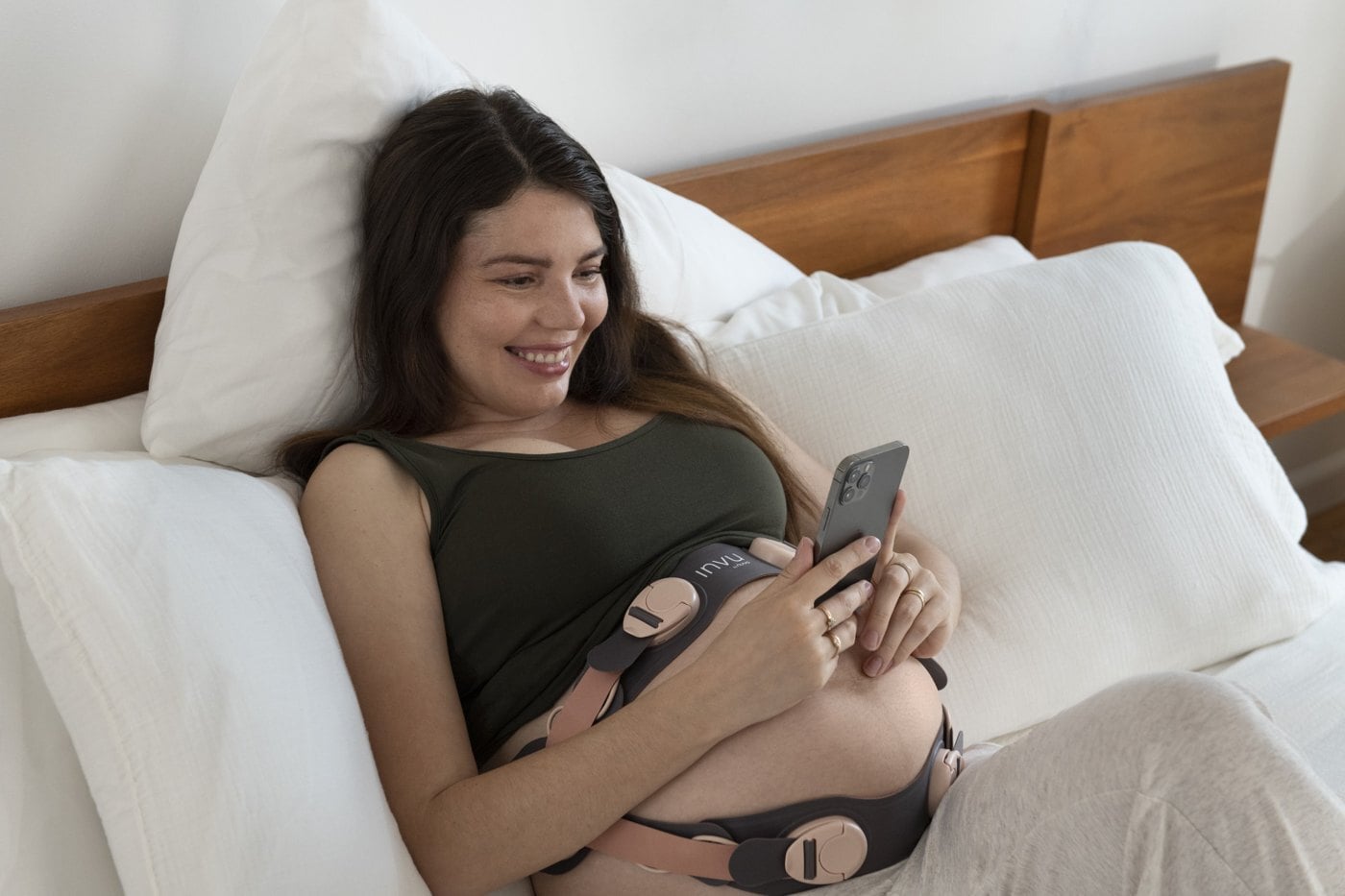 Expectant mother · from anywhere
 Her clinician · remotely in INVU™ Pro
The remote NST with INVU™
Recorded from anywhere. Reviewed remotely.
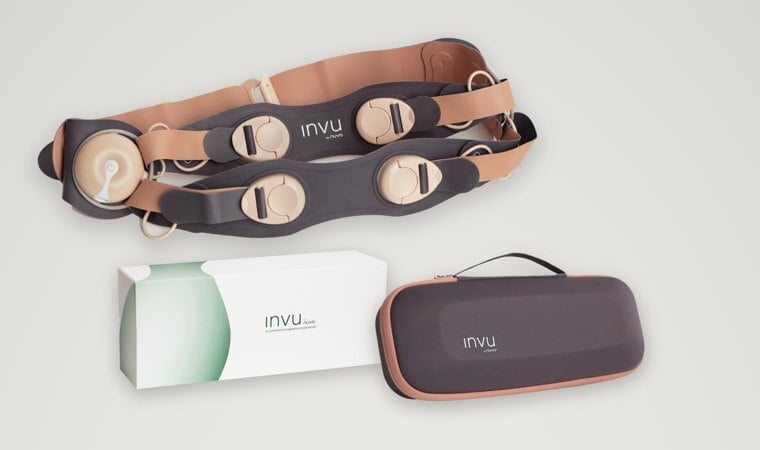
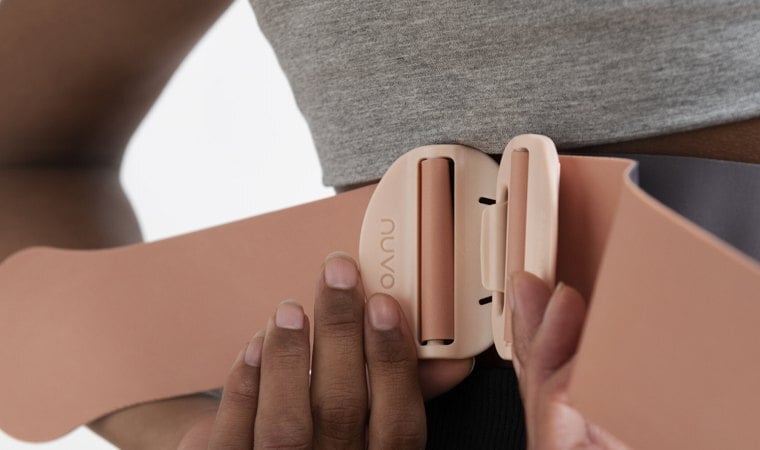
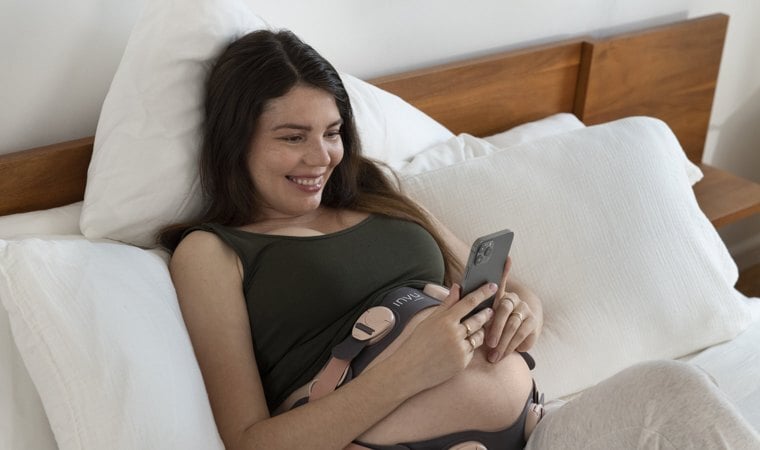
- The expectant mother wears one soft band and starts each session in the INVU™ App, from anywhere, on the schedule you prescribe.
- Electrical and acoustic sensors: no ultrasound transducer and no pressure belt to position.
- Her clinician reviews the full tracing remotely in INVU™ Pro, several sessions side by side.
- At Penn Medicine, 93.9% of 131 home NSTs were interpretable and 88.5% of appointments needed no office visit.3
Sources: 1 Schwartz et al., AJOG 2022 · 3 Hamm et al., AJOG 2023. Screen: INVU™ Pro, sample data.
What your team sees in INVU™ Pro
INVU™ Pro shows your team the full tracing of every home NST. The clinician interprets it and decides.
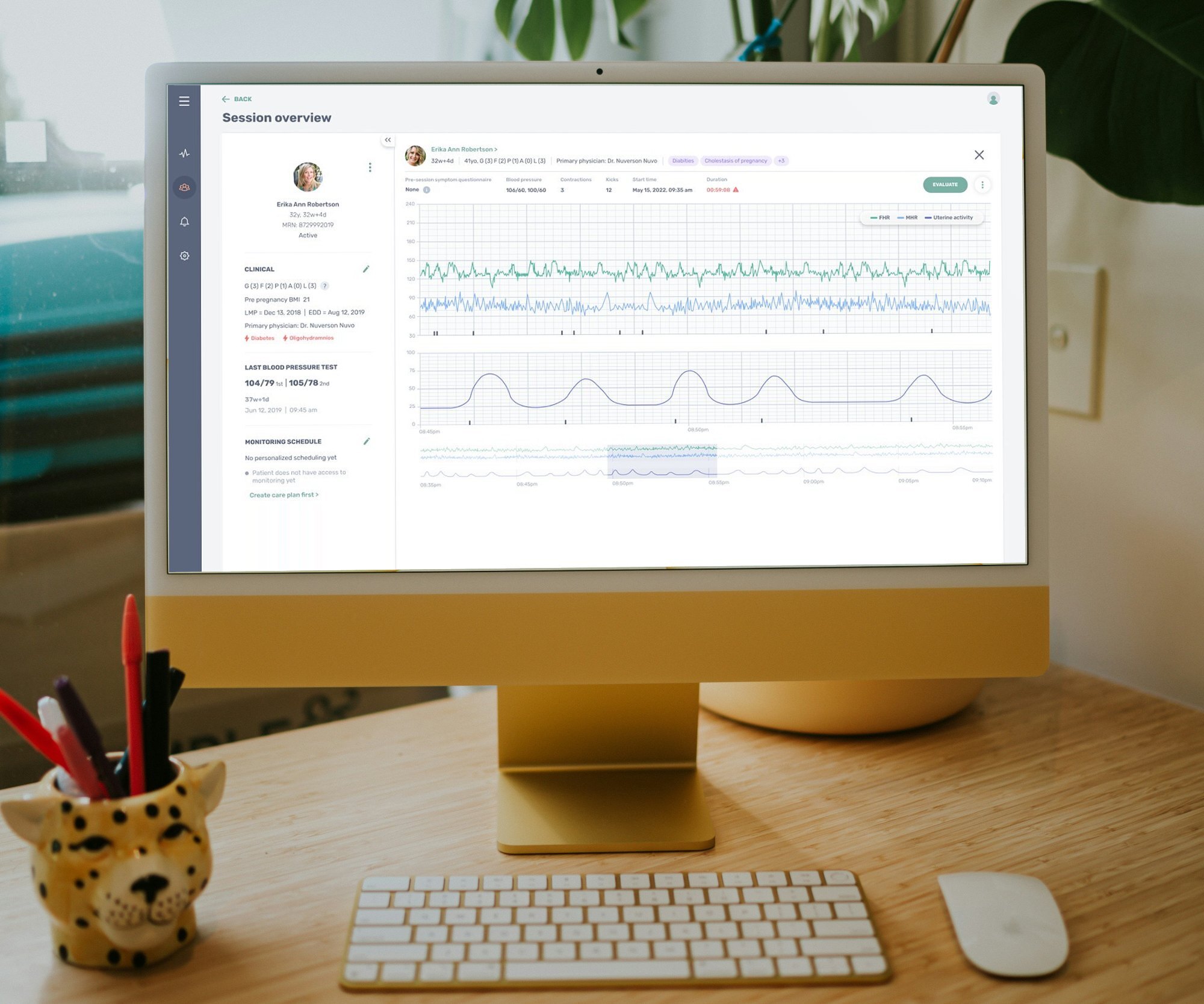
Fetal heart rate
The full tracing, beat by beat.
Maternal heart rate
Recorded at the same time, on the same time line.
Contractions
Uterine activity under the heart rates.
Kick and contraction marks
Added by the expectant mother during the session.
Live sessions
Several sessions at once, side by side.
Care plan
Prescribe the sessions and set the schedule.
Appointments
Every scheduled session in one list.
A patented decision-support layer is in development (not FDA-cleared). Screens: sample data.
Prescribed, scheduled, repeated
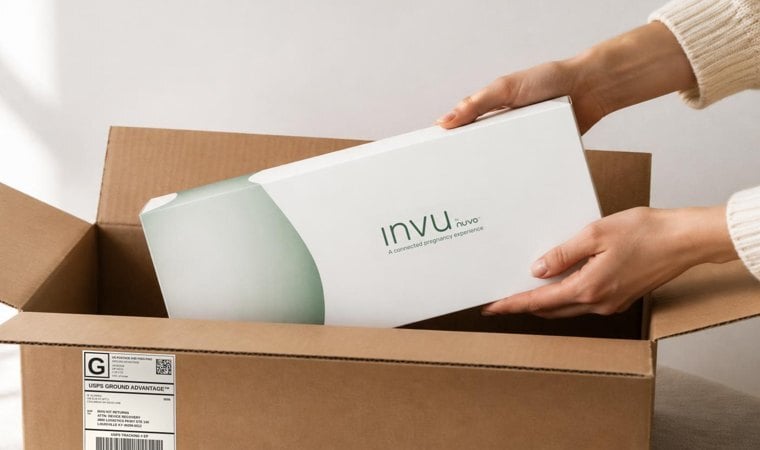
Equipment and training are fully managed by Nuvo, from the box at the expectant mother’s door to the kit coming back.



Tested against the hospital’s own standards
Heart rate was compared with the bedside CTG monitor. Contractions were compared with the intrauterine pressure catheter (IUPC), the gold standard, in women who also wore the standard external TOCO belt.
of catheter-confirmed contractions were detected by INVU™ and by the TOCO belt, in the same 39 women in labour (P<.0001).1
Schwartz et al., AJOG 2022 →TOCO detection fell from 55.9% to 30.3% in women with obesity (P=.024); INVU™ did not change with BMI (P=.13). INVU™: 78 women; TOCO: the 39 who also wore it.1
Schwartz et al., AJOG 2022 →Mean difference −0.30 bpm; 95% limits of agreement −8.84 to +8.24 bpm, inside the pre-set ±10 bpm. Maternal heart rate r = 0.97. 147 women, four centres in the US, Germany and Israel.2
Mhajna et al., AJOG MFM 2020 →Study details and limits
The contraction study was done in labour, with a catheter already in place for clinical reasons; INVU™ also marked more contractions the catheter did not record (24.3% against 10.7% for TOCO, in the same 39 women). The heart-rate study was done in clinic, before labour, with staff applying the band. Both studies were funded by Nuvo. The home study at Penn had no comparison group. Each paper’s page gives the details.
Published evidence, study by study
Each card opens the study summary on our Clinical Evidence pages, with the full citation, design, limits and funding.
Accuracy against the hospital standard
118 women in labour. INVU’s detection did not change with BMI; TOCO fell from 55.9% to 30.3%.
Read the summary →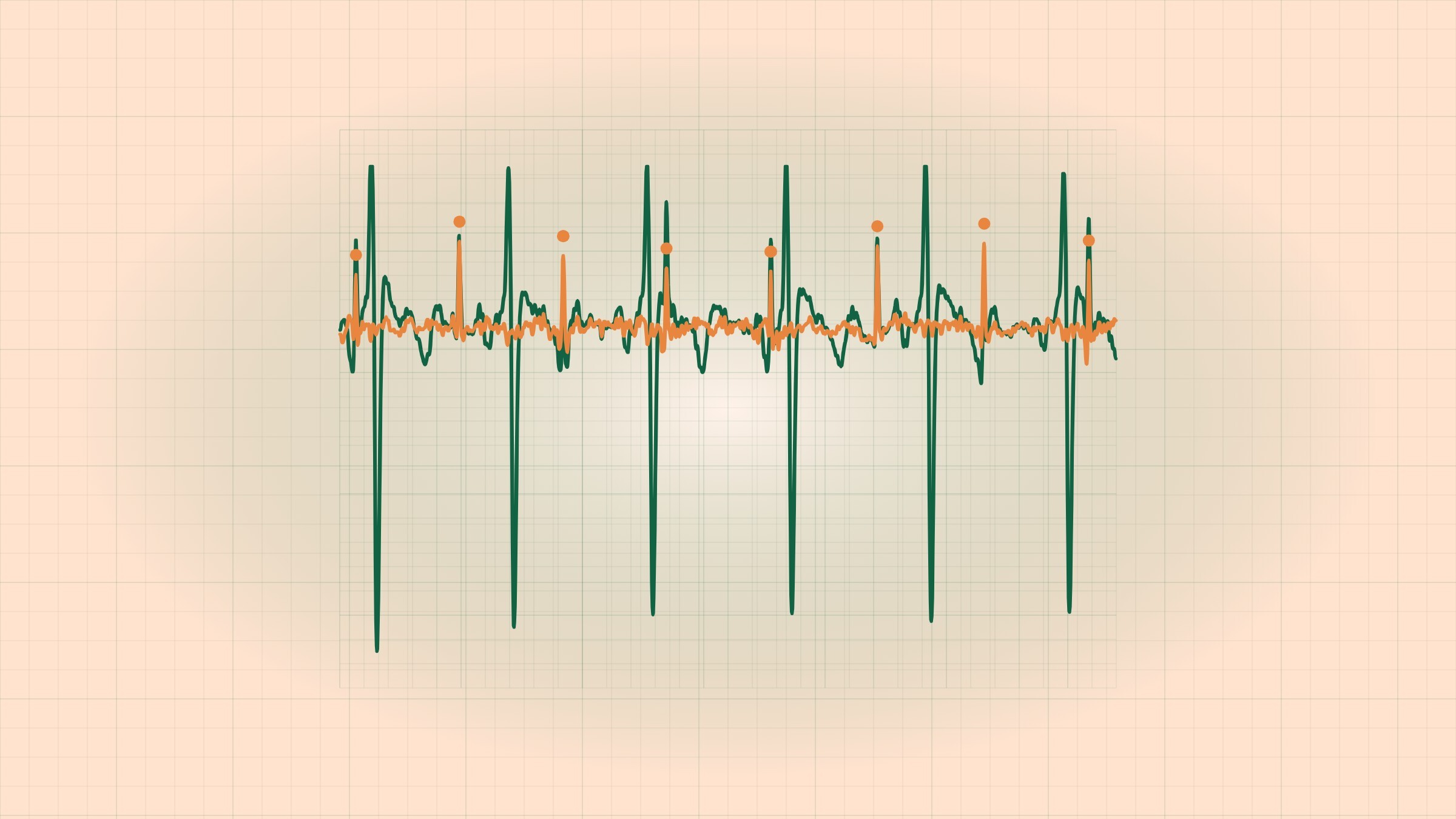
147 women at four centres. 95% of differences within −8.8 to +8.2 bpm, inside the ±10 target. Maternal heart rate r = 0.97.
Read the summary →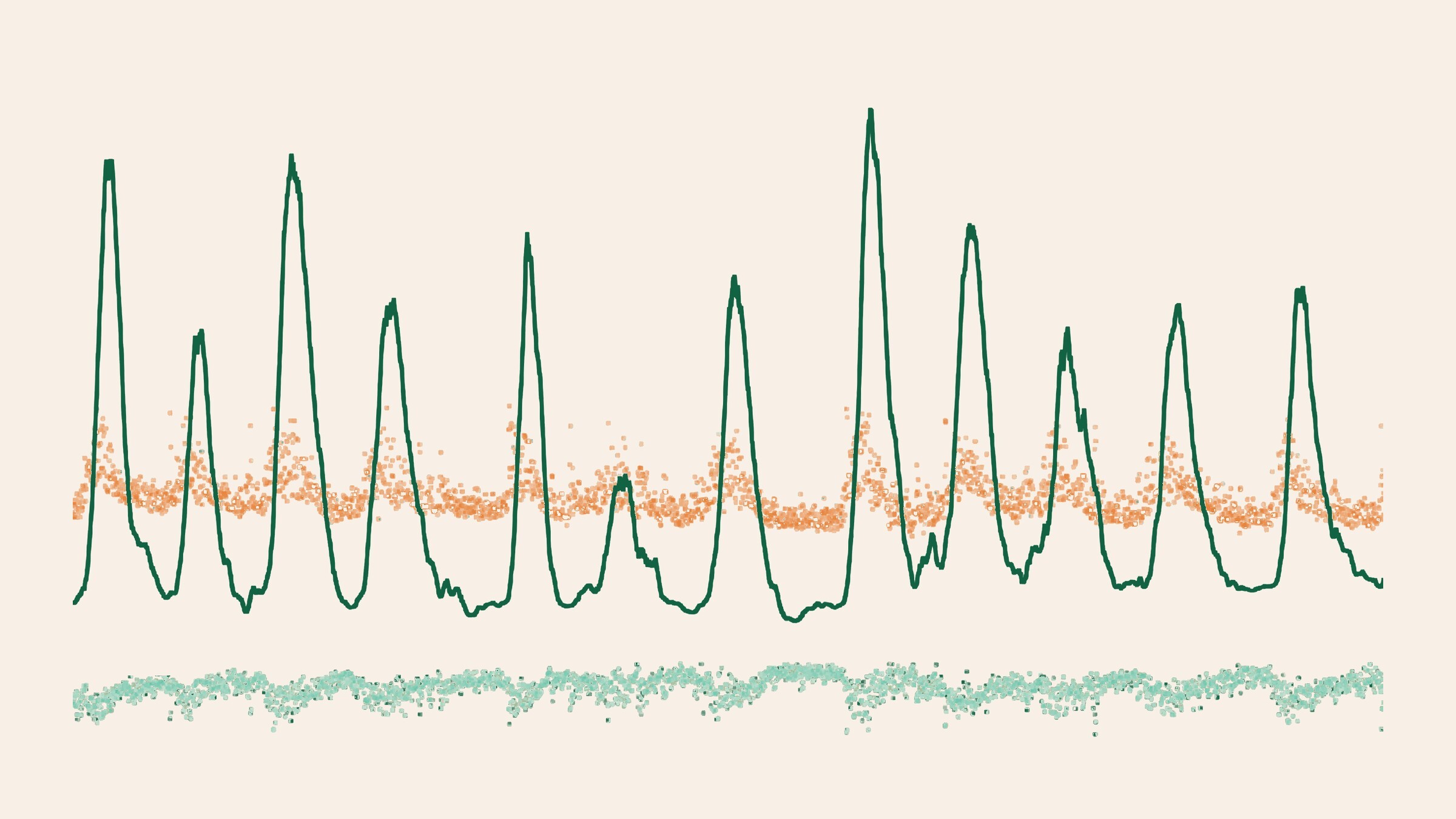
The cardiac-derived method behind INVU’s contraction reading, tested in 41 women in labour.
Read the summary →Remote NSTs at home

Penn Medicine, high-risk pregnancies, self-applied at home. 88.5% of appointments avoided a clinic visit.
Read the summary →222 patients across 10 clinical sites.
Read the summary →
Sheba Medical Center, gestational diabetes: a median 59 minutes for a home visit against 159 minutes door to door.
Read the summary →
Avoiding clinic visits was the benefit named most often, in 59.6% of answers.
Read the summary →Independent research and clearances
The validation studies and the Penn home study were funded by Nuvo; the Sheba studies were led and designed by Sheba investigators. All clinical evidence →
One band, three signals
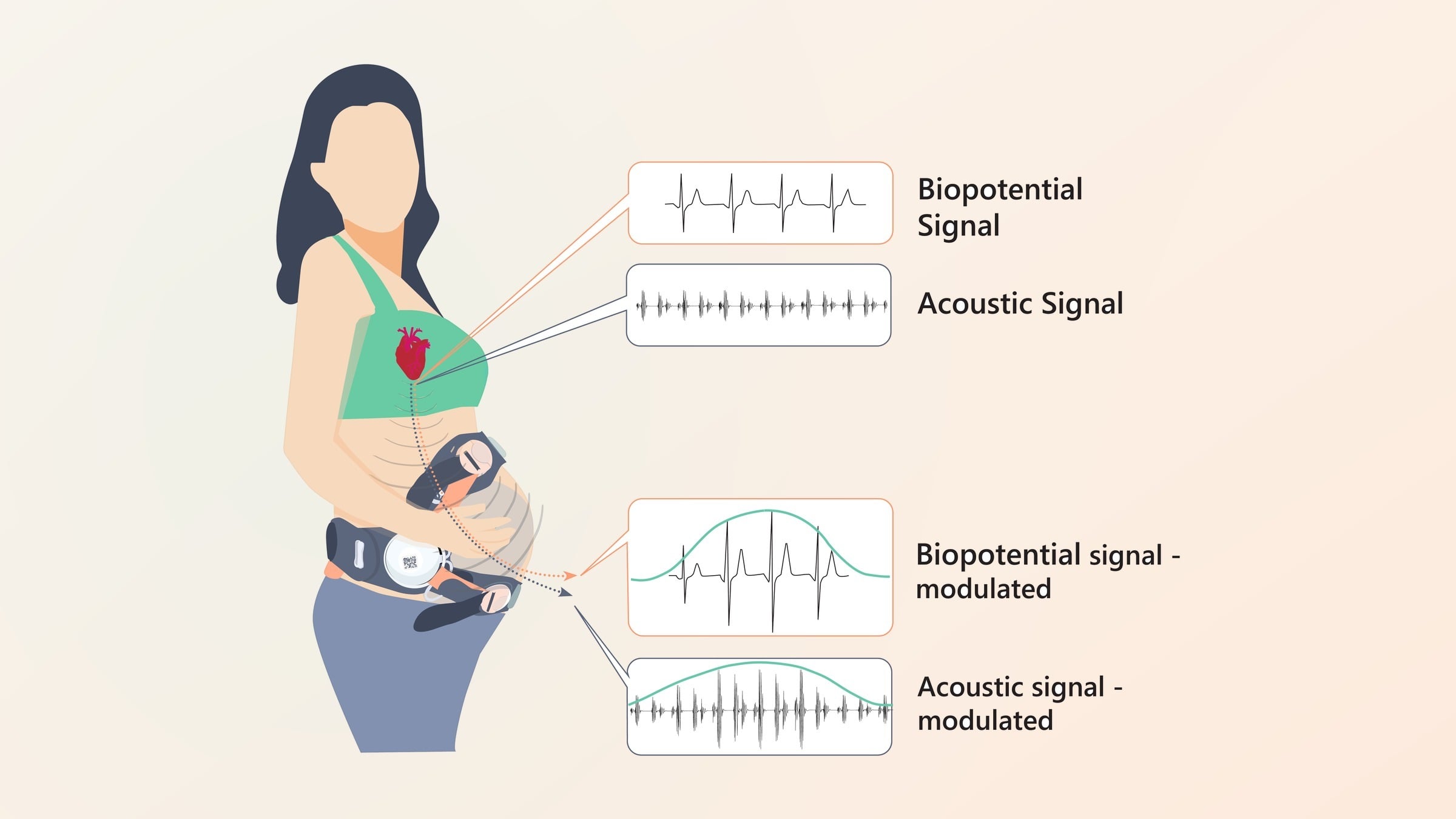
The INVU™ Sensor Band combines biopotential (ECG), acoustic and motion sensors. The INVU™ Data Platform turns the recorded signals into fetal heart rate, maternal heart rate and contractions; contractions are read from the mother’s own heart signals4, with no pressure (TOCO) belt.
FDA 510(k) K210025 (2021) and K221046 (2022)
Remote, self-administered monitoring of fetal heart rate, maternal heart rate and uterine activity for antepartum non-stress testing, at home or in a healthcare facility; singleton pregnancies from 32 weeks; on a physician’s order.
Practices using INVU™
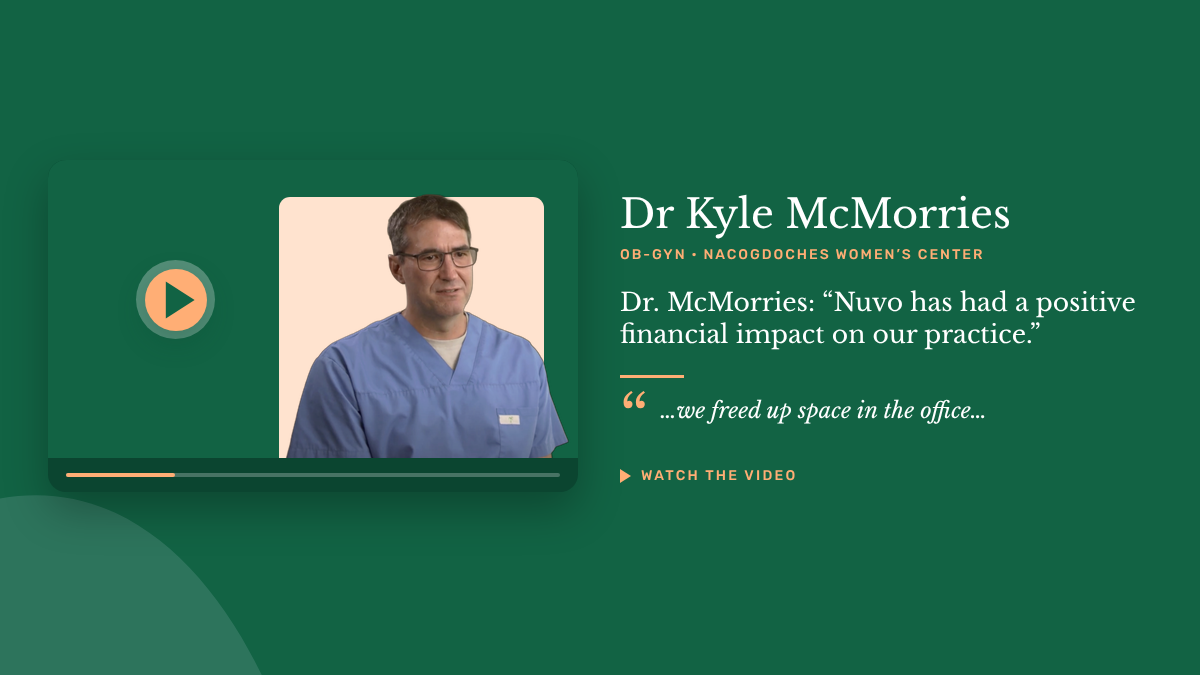
Dr. McMorries: “Nuvo has had a positive financial impact on our practice.”
An OB/GYN in rural East Texas on remote NSTs.
Watch →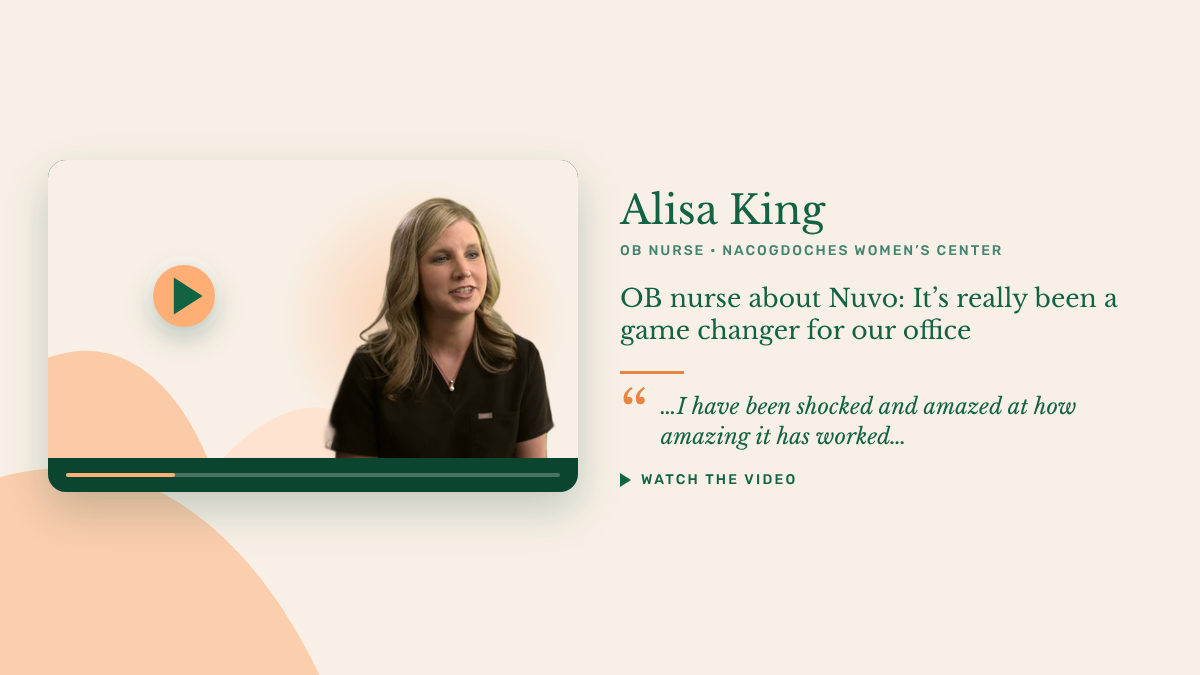
OB nurse: “It’s really been a game changer for our office.”
Alisa King, OB nurse, on running remote NSTs.
Watch →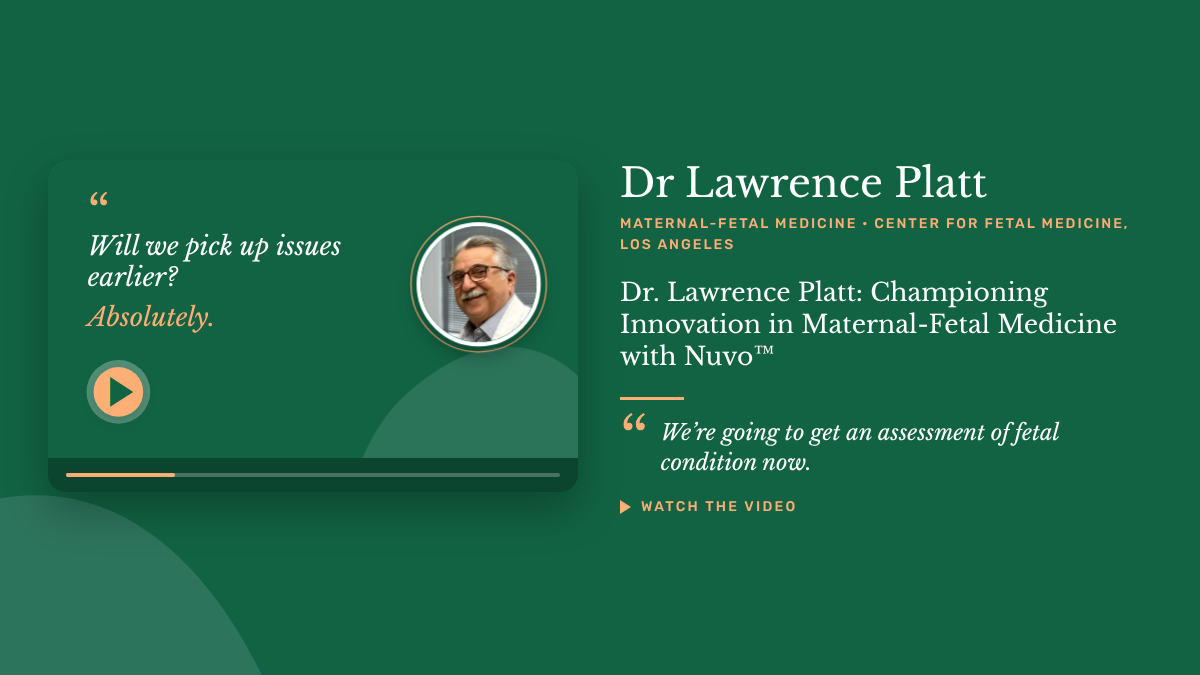
Dr. Lawrence Platt on innovation in maternal-fetal medicine
A maternal-fetal medicine specialist on remote monitoring.
Read →Questions about INVU™ by Nuvo?
Request a demo, or write to us and we will come back to you.